Hedge Trimming Brixton: Recycling and Sustainability
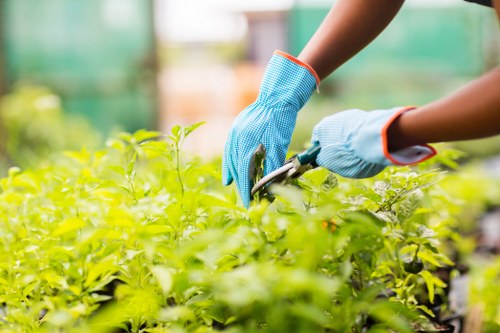 Hedge Trimming Brixton is committed to an eco-first approach. Our local garden clearance and hedge trimming in Brixton work is organised to minimise waste, maximise reuse and follow the boroughs' approach to waste separation. We set an ambitious target: 75% overall recycling for all our jobs and 85% diversion for green waste specifically. These targets are monitored monthly and reported internally so our Brixton hedge services continually improve their environmental performance.
We operate with a clear separation workflow on site: green waste (prunings, leaves, small branches) is separated from timber suitable for chipping and from mixed garden litter that must be transported to local transfer stations. This echoes the local council ethos where organic streams are collected and treated separately from residual waste. By sorting at source we support kerbside and civic amenity systems in Lambeth and neighbouring boroughs, reducing contamination and increasing the quality of material sent for composting or mechanical treatment.
Local transfer stations and waste routes
Our team uses nominated transfer stations and civic amenity points across the area to keep collections efficient and compliant. We work with borough transfer facilities and nearby London transfer stations and reuse hubs, ensuring materials follow legal waste-transfer chains. Key routes focus on: green waste to composting, wood to chipping and biomass, and reusable items to charity partners. We maintain paperwork for every load and prioritise sites that accept separated green and timber fractions to meet our stated recycling targets.Partnerships with local charities and community projects
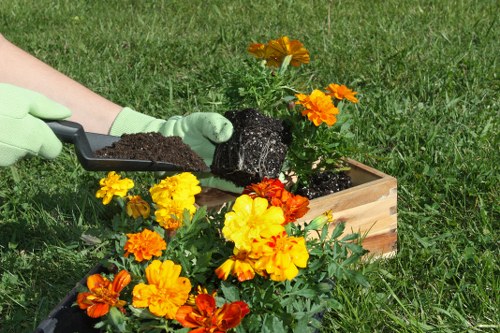
We deliberately partner with local reuse organisations and community allotments to extend the life of garden materials. Small logs, untreated timber and healthy soil are offered to community gardens and allotments; flowering shrubs and potted specimens that can be salvaged are donated to social projects wherever possible. These partnerships include community composting projects, reuse centres and local volunteer-run green spaces. With these coordinated efforts we aim not only to recycle but to regenerate urban green space in Brixton.Our charity collaborations follow clear acceptance criteria: items must be safe and clean and fit the needs of the recipient groups. Where plants, compost or timber cannot be reused directly they are channelled to authorised facilities for processing into mulch and compost. This two-tier approach—reuse first, recycling second—reduces the climate impact of waste management and supports local circular-economy activity across borough lines.
Low-carbon transport and fleet choices
To lower emissions from haulage we use a mixed fleet of low-carbon vans and purpose-built carriers for green waste. Our Brixton hedge trimming vehicles include electric vans for shorter urban runs and hybrid light trucks for larger jobs, plus route optimisation software that reduces idle time and mileage. The result is a measurable drop in fuel consumption and CO2 per job compared with standard diesel fleets. We regularly review fleet performance to invest in greener vehicles as technology and infrastructure improve.
On-site practices for sustainable gardening waste
On site our teams apply sustainable practices: minimal disturbance of soils, retention of beneficial cuttings for on-site mulching when appropriate, and careful segregation of recyclable materials. We prioritise chipping branches for mulch and woodchip, which is then offered back to clients, community gardens or taken to certified composting facilities. This reduces the need for new peat or fertilizers and helps build healthier urban soils—an important aim for any Brixton garden maintenance programme. We also run an internal education programme so operatives know the best way to sort waste according to the boroughs' waste separation policies. This includes recognising which materials are classed as organic, which are recoverable timber and which require disposal at a residual waste stream. Clear labelling on collection bags and bins supports correct segregation from the first cut through to the transfer station.
How we measure successOur sustainability performance is measured against the recycling percentage target and operational KPIs: percentage diverted from landfill, percentage reused via charities/community projects, and fleet emissions per job. We publish internal summaries and continuously iterate our processes. By combining careful on-site sorting, strong partnerships with transfer stations and charities, and a low-carbon vehicle strategy, we deliver a practical, local model of sustainable hedge and garden waste management in Brixton and surrounding boroughs.
- Target recycling rate: 75% overall, 85% green-waste diversion
- Local focus: use of civic amenity and transfer stations in Lambeth and neighbouring boroughs
- Partnerships: donations and reuse for community gardens and allotments
- Fleet: electric and hybrid vans with route optimisation
We believe sustainable Brixton hedge trimming is about more than removing overgrowth: it is a cycle of care that returns value to soil, supports local projects and reduces carbon. Our approach is designed to fit local waste-separation systems while pushing above-and-beyond targets for recycling and reuse.